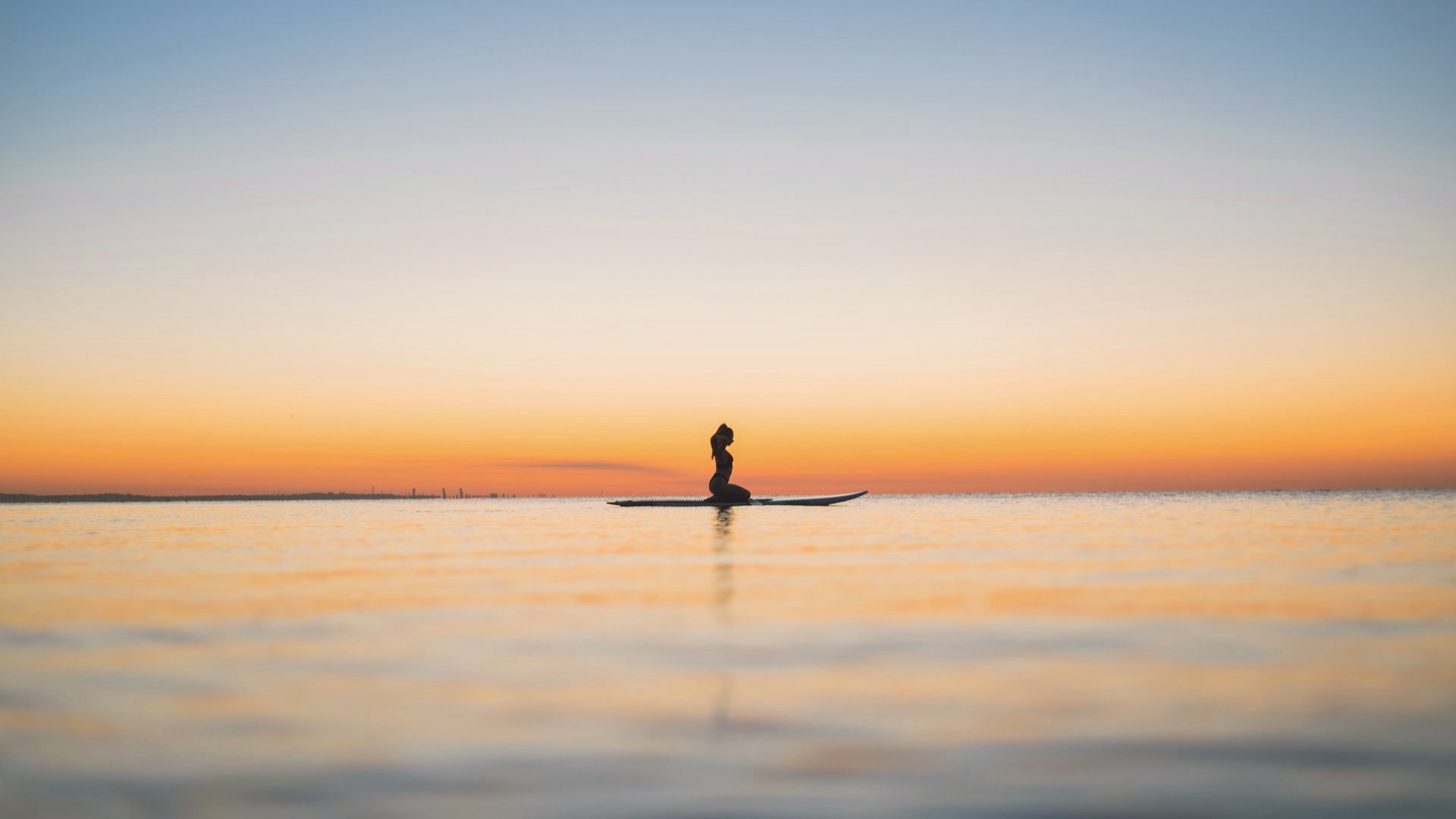
Your hands are around a warm cup, but your mind is back in yesterday's conversation, or several hours ahead, rehearsing something that hasn't happened yet. Steam rises and disappears. The coffee goes cold without you noticing the exact moment it did. The morning passes. And somehow, you were barely in it.
This isn't a personal failing — it's simply what an unattended mind does, left to drift between memory and worry. And yet everything you have ever experienced has happened in the present moment. Every sound you've ever heard, every hand you've ever held, every ordinary Tuesday — all of it arrived as a now. There is no memory that wasn't once one. There is no future that will arrive as anything else, when it comes.
So if everything real happens here, why do we spend so much of our lives somewhere else? That question is the beginning of presence — not a technique to master, but a way of meeting your own life while it's actually happening.
We Rarely Live Where Life Happens
A woman once described driving her usual route home from work — the same turns, the same three sets of lights — and arriving in her driveway with no memory of any of it. Not a foggy memory. No memory at all. Twenty minutes of her life had simply happened without her.
Most of us know this feeling, even if we've never named it. Eating a meal and not tasting the last few bites. Reading a page and realizing, at the bottom, that none of it landed. The body completes the action. The mind is somewhere else, replaying, rehearsing, narrating a life it's too busy thinking about to actually live.
This isn't unusual; it's close to the default. We're trained to live mentally, and the difficulty isn't thinking itself — it's mistaking ourselves for the thinking. Worry rarely changes an outcome. What it reliably does is remove you from the only moment you actually have any influence over.
Life happens in the present. Thoughts simply comment on it.
What Presence Really Is
Presence isn't concentration, and it isn't forcing the mind to go quiet. Concentration is narrow — attention pointed hard at one thing, everything else pushed to the edges. Presence is wider: not narrowing attention onto an object, but being aware — aware of what you're doing, and aware that you're doing it.
You've felt it already. Stepping outside after being indoors too long, and simply noticing the air on your skin, cooler or warmer than you expected. The half-second of stillness after a piece of music ends, before the next thought arrives to fill it. The weight of a mug in your hand, the specific warmth of it, felt for a moment before the mind moves on to something else.
None of this requires silencing the mind. It only asks that you notice thought arising, rather than mistaking it for all of who you are.
Why Being Present Can Feel Difficult
Partly, it's structural — phones, productivity culture, and constant stimulation all make stillness feel unfamiliar, even faintly uncomfortable, simply because it's practiced so rarely. But there's a deeper reason too: presence brings us close to feelings we've been quietly avoiding.
Stillness doesn't create discomfort. It reveals discomfort that was already there. This is ordinary, and it softens with time, not force.
Nature Lives Entirely in the Present
Picture a field at the end of the day — tall grass, gone gold in the low light, each stalk bending slightly with the wind and then straightening again, unhurried. There's no part of that grass rehearsing tomorrow's wind, or resisting today's. It simply moves as the air moves, and stills when the air stills.
A tree doesn't worry about the coming winter. It responds to the season it's actually in — growing when there's light, going quiet when there isn't. An ocean doesn't resist the tide going out. A bird doesn't rehearse tomorrow's flight before taking today's. Nothing in the natural world seems to spend its energy resisting what's currently true.
Humans are part of nature too, not visitors to it — but somewhere along the way, we developed the unusual ability to mentally leave the present moment for hours at a stretch. This is part of why time outdoors so often brings a quiet, hard-to-name relief. Stand in that field long enough, and something in the chest tends to loosen. The pace of your thinking slows to match the pace of the grass moving. For a while, without trying, you're simply where you are — feet on the ground, wind against your arms, the light doing exactly what light does at that hour, asking nothing of you but to notice it.
“Realize deeply that the present moment is all you have.”
Eckhart TolleMeditation Is Practice. Presence Is Life.
Meditation is the practice of sitting with attention, noticing the mind wander, and gently returning. Presence is what that training is for — how you move through an ordinary Tuesday once it takes hold.
It's there in walking without headphones, feeling your feet actually meet the ground. It's there in listening without composing your reply in advance, letting a small silence sit after someone finishes speaking. It's there in tasting the first sip of tea — really tasting it — instead of realizing, three sips in, that you hadn't. None of it requires anything extra. Just attention that hasn't already left the room.
“Feelings come and go like clouds in a windy sky.”
Thich Nhat HanhWhat Presence Is Not
It doesn't mean having no thoughts, being passive, avoiding plans, suppressing emotion, or growing detached from life. Presence usually does the opposite of each — it simply means meeting all of it more clearly, without a story layered on top.
A Few Simple Ways In
- One conscious breath before opening your phone.
- Walk without headphones, sometimes.
- Eat one meal a day without a screen.
- Listen fully in one conversation, without rehearsing your reply.
- Pause between rooms, between tasks — just long enough to arrive.
Before you go on with the rest of your day, stay here a moment longer.
Notice the weight of whatever is in your hands right now — this page, a phone, a cup gone cold. Notice your own breath, moving in and out, without needing to be managed. Notice the room around you, exactly as it is, asking nothing of you.
Perhaps peace was never hiding from you. Perhaps it has quietly waited beneath every thought, patient, unchanged, the whole time.
Not asking you to become someone different.
Only asking you to notice what has always been here.
One breath.
One moment.
One life — happening now, and only now.
“Be here now.”
Ram DassContinue Into
When the Mind Won't Quiet →