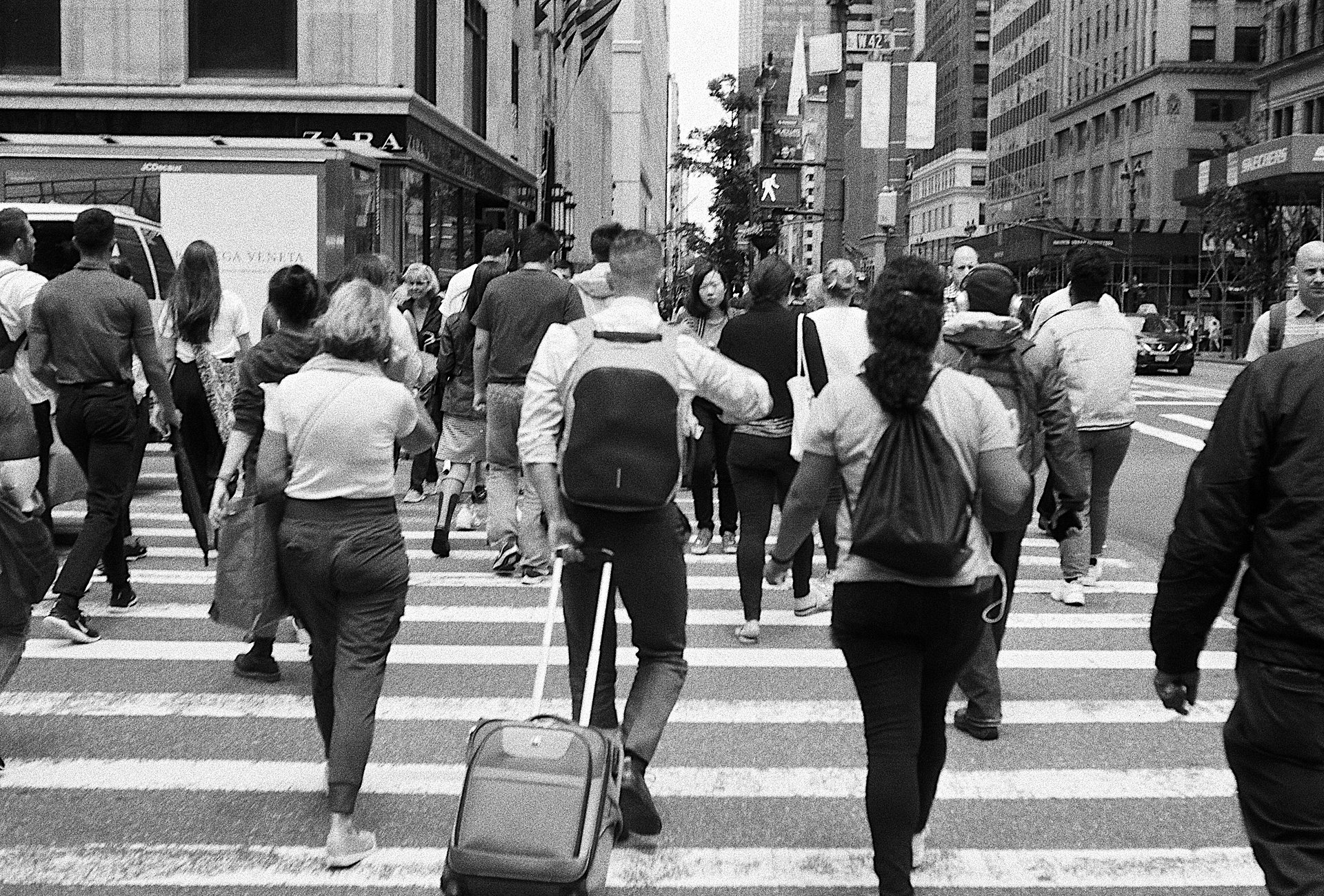
Lunch happens at the desk most days — one hand on a fork, the other still moving a cursor, an email half-composed in the gap between bites. The plate empties. The inbox thins. And somewhere in the middle of both, the actual experience of eating simply never occurred. Not because anything went wrong. Because nothing was ever fully there to begin with.
This is what a rushed life tends to feel like from the inside: not one dramatic overwhelm, but a thousand ordinary moments quietly skipped, one after another, in the name of getting to the next one faster.
Speed Is a Habit of the Mind, Not a Requirement of Life
The voice in the head is fond of urgency. It builds a version of you that moves fast, handles everything, never falls behind — and once that identity takes hold, slowing down can start to feel like a threat to who you are, rather than simply a different pace to move through a day.
Very little of this urgency comes from the present moment itself. Most of it is inherited — a habit absorbed from a culture that treats rest as something to be earned and busyness as evidence of worth. The mind repeats the pattern long after any real emergency has passed, because it has never been shown another way to move.
The Body Was Never Built to Rush Forever
A nervous system kept in a state of low-grade urgency long enough eventually stops being able to tell the difference between real danger and a full inbox. Both register the same way: tension, shallow breath, a low hum of alertness that never quite switches off.
Slowing down, physically, is often the first place presence becomes possible again. Not because slowness is virtuous in itself, but because a body finally allowed to unclench has room to notice something other than the next task in line.
“It is not that we have a short time to live, but that we waste a lot of it.”
SenecaSlowness Is Not Laziness
Slowing down isn't the same as doing less, and it isn't the opposite of accomplishment. A full day can still be unhurried if it's met one thing at a time, rather than several things at once, none of them quite arriving.
What changes isn't always the number of tasks. It's whether each one gets your actual attention while it's happening, or only the leftover portion of a mind already halfway to the next thing.
One Unhurried Task
Rather than restructuring an entire day, one small experiment tends to be enough to start: choose a single ordinary task — making coffee, walking to the car, washing a dish — and do it at roughly half your usual pace, on purpose, just once.
Nothing about the task needs to change. What tends to change is what becomes noticeable inside it — the weight of the cup, the temperature of the water, the particular quality of light in the room — none of it new, all of it simply unnoticed before, at the old speed.
Nothing here is asking you to slow down forever.
Only to notice, every so often, that the rush was a habit — not a law — and that it can be set down, if only for the length of one unhurried task.
Continue Into
The Economy of Attention →